
Key takeaways
- Find the best dual tank floor washers for large kitchens, with separate clean and dirty water tanks, wide cleaning paths, and corded and cordless options.
Introduction
A large kitchen changes what a floor washer has to do. More open floor means more ground to cover in a single session, more cooking splashes and tracked-in grit, and more trips back to the sink when a tank runs dry. A dual tank floor washer answers the biggest part of that problem: it keeps clean water and cleaning solution in one tank and collects dirty water in a separate tank, so the brush always works with fresh solution instead of spreading the same dirty water across the floor.
That separation matters most on a big floor. With a single tank design, the water you mop with gets dirtier as you go, which means the last section of a large kitchen gets cleaned with the dirtiest water. A dual tank machine avoids that entirely. Every pass lays down fresh solution and lifts the dirty water away into its own compartment, which you empty at the sink when it fills.
This guide focuses on dual tank floor washers that suit large kitchens: machines with tanks that cover a wide area between refills, cleaning paths wide enough to finish open floor quickly, and power arrangements that match how you clean. One pick is corded, so it runs without a battery limit, and the other is cordless, so it moves freely around islands, tables, and chair legs. Both vacuum and wash at the same time, so crumbs and spills are picked up in one pass.
Use the comparison below for a quick overview, then read the detailed sections to match a machine to your floor type, your kitchen layout, and how much maintenance you are willing to do after each session.
At a Glance
| Product | Power | Tank System | Cleaning Path | Suited For |
|---|---|---|---|---|
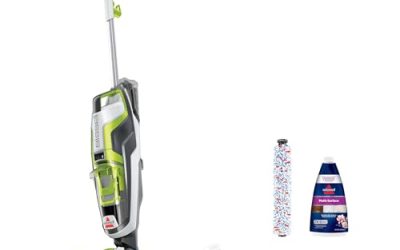
| BISSELL CrossWave Turbo, 3888A | Corded | Two separate tanks for clean and dirty water | Wide multi-surface brush roll | Large kitchens where continuous power matters |
| Tineco Floor ONE S5 | Cordless | Separate clean water and dirty water tanks | Wide brush head with edge cleaning | Large kitchens where freedom of movement matters |
1. BISSELL CrossWave Turbo, 3888A

The BISSELL CrossWave Turbo, model 3888A, is a corded wet and dry floor washer that vacuums and washes at the same time. It is built around the idea that a kitchen floor rarely presents one kind of mess at a time: crumbs, pet hair, splashed sauce, and tracked-in dirt usually arrive together, and this machine is designed to pick up wet and dry debris in a single pass instead of asking you to vacuum first and mop second.
Listing Features
- Two-tank technology keeps clean water and formula separate from dirty recovery water, so only fresh solution reaches the floor.
- Vacuums and washes at the same time, picking up wet and dry debris across sealed hard floors in one pass.
- Corded power with a long cord, so cleaning does not stop for a battery recharge in the middle of a large kitchen.
- Multi-surface design for tile, sealed wood, laminate, linoleum, rubber floor mats, pressed wood floors, and area rugs.
- Area rug refresh capability, which is useful in kitchens with runners or low-pile rugs near the sink and stove.
- Multi-surface brush roll that scrubs while the suction lifts dirty water into the recovery tank.
Why It Suits a Large Kitchen
The corded design is the main reason this machine fits a large kitchen so well. A cordless machine ends its session when its battery ends, and a big kitchen can take longer than one charge allows. The CrossWave Turbo runs as long as it is plugged in, so the size of the room never cuts a cleaning session short. The long cord covers a wide area from a single outlet, and moving the plug once or twice is a small interruption compared with waiting for a battery to recharge.
Considerations
- It is corded, so you need to plan outlet placement and manage the cord around islands and table legs.
- The dirty water tank needs emptying and rinsing after use, and the brush roll needs cleaning so it stays fresh between sessions.
- At around 11 pounds for the CrossWave family of machines, it is an upright appliance rather than a lightweight stick, so carrying it up and down stairs takes some effort.
- It is designed for sealed hard floors and area rugs, not for deep carpet cleaning or unsealed wood.
2. Tineco Floor ONE S5

The Tineco Floor ONE S5 is a cordless wet and dry vacuum and mop combination that vacuums and washes hard floors in one step. It is built for homes where the kitchen connects to other hard floor areas, and where moving freely without a cord matters more than unlimited run time. Its sensor system watches how dirty the floor is and adjusts suction and water flow to match, which helps it handle a kitchen that goes from a light dusting of crumbs near the table to a sticky spill near the stove.
Listing Features
- Separate clean water and dirty water tanks, with a 0.8-liter clean water tank and a 0.7-liter dirty water tank.
- iLoop smart sensor that detects dirt and adjusts suction and water flow automatically as conditions change.
- Digital display that shows cleaning status and machine information at a glance.
- Self-cleaning cycle that flushes the brush roller while the machine sits on its storage dock.
- Edge cleaning design that helps the brush head reach along baseboards and into corners.
- Cordless operation with a battery run time of up to 35 minutes, depending on mode and use.
- Lightweight cordless frame that is easy to steer around chair legs, islands, and table bases.
Why It Suits a Large Kitchen
Freedom of movement is the main advantage here. A large kitchen usually has an island in the middle, a table with chairs, and cabinets along the walls, and a cordless machine threads through that layout without dragging a cord behind it or needing an outlet change partway through. The sensor-driven water flow also helps on a big floor: it uses more water and suction where the floor is dirty and less where it is already clean, which stretches the clean water tank further across a large area.
The self-cleaning cycle is another practical advantage. After a long session on a large kitchen floor, the brush roller has picked up a lot of grime, and the dock-based cleaning cycle flushes it out without hand scrubbing. The digital display keeps the session visible, showing when the machine is working harder on a dirty patch.
Considerations
- Battery run time is limited to up to 35 minutes, so a very large kitchen may need a mid-session recharge or a second pass on another day.
- The clean water tank holds 0.8 liters, so the biggest kitchens may need one refill during a full session.
- The dirty water tank should be emptied promptly after use to keep the machine fresh.
- It is designed for hard floors, so area rugs and carpet are outside its intended use.
- The brush roller and filter need regular cleaning and occasional replacement to keep suction and washing performance steady.
How to Choose a Dual Tank Floor Washer for a Large Kitchen
Choosing the right machine starts with how your kitchen is laid out and how you like to clean. Work through the points below in order, and the right category of machine usually becomes clear before you compare individual models.
Corded or Cordless
This is the first decision, and it shapes everything else. A corded machine runs without a time limit, which suits a large kitchen where a full clean takes a while. You trade that for cord management: you will move the plug between outlets and guide the cord around furniture. A cordless machine removes the cord entirely and moves freely, but its battery sets a hard limit on each session. If your kitchen is large enough that cleaning takes more than half an hour, a corded machine or a cordless machine with a generous run time are the two realistic options. Measure your cleaning sessions honestly: if you usually finish in twenty minutes, cordless is convenient; if you usually take forty minutes or more, corded power removes the worry.
Tank Capacity
Tank capacity decides how often you stop at the sink. In a large kitchen, a small clean water tank means refilling partway through, and a small dirty water tank means emptying partway through. Look at both tanks, not just one: the clean tank sets how far fresh solution reaches, and the dirty tank sets how much grime the machine can collect before it needs emptying. Larger tanks suit larger floors, but they also add weight when full. As a rule, a clean water tank under half a liter will need refilling on a large kitchen, while tanks around three quarters of a liter or more usually cover a full session.
Cleaning Path Width
Cleaning path width decides how many passes cover your floor. A wider brush head finishes open floor faster, which is exactly what a large kitchen needs. A narrower head threads more easily between chair legs and around tight corners, but it takes more passes across open space. Most kitchens have both open floor and tight spots, so a mid-width path with good edge cleaning is often the best compromise. Edge cleaning matters along baseboards and cabinet kick plates, where dirt collects and a brush that cannot reach the edge leaves a visible line.
Floor Types in Your Kitchen
Check the floor surfaces your machine will actually clean. Most dual tank floor washers are designed for sealed hard floors: tile, sealed wood, laminate, vinyl, and linoleum. If your kitchen has an area rug or a runner, a machine that can refresh low-pile rugs adds real value, because it lets you clean the rug in the same session as the floor around it. If your kitchen floor is unsealed wood, stone, or waxed, check the manufacturer’s guidance for that surface before choosing, since not every machine is rated for every floor.
Weight and Maneuverability
A large kitchen means a longer cleaning session, and weight matters more the longer you push a machine. A lighter machine is easier to steer around furniture and carry to storage, while a heavier machine can feel more planted on the floor. Swivel steering helps in a kitchen full of obstacles, letting the head turn around chair legs and island corners without lifting the machine. Try to picture the full session: pushing the machine across open floor, turning it around the island, and carrying it back to its storage spot.
Maintenance After Each Session
Every dual tank floor washer needs some care after use. The dirty water tank must be emptied and rinsed, the brush roll must be cleaned, and filters must be washed or replaced on schedule. Machines with a self-cleaning cycle reduce the hand work, but they do not remove it entirely: the dirty tank still needs emptying, and the brush area still benefits from a rinse.
Fit and Installation Considerations
A floor washer is not a built-in appliance, so installation is simple, but a few fit checks before buying save frustration later.
Storage Space
Measure the spot where the machine will live. Upright floor washers stand roughly waist to chest high and need a floor footprint about the size of a small waste bin, plus room for a charging and storage dock on cordless models. A utility closet, laundry area, or pantry corner usually works. The dock needs a nearby outlet for cordless machines, and the machine needs to stand upright so the tanks do not leak.
Outlet Placement
For a corded machine, check that your kitchen outlets cover the whole floor with reasonable cord reach. A long cord from one or two outlets usually covers a large kitchen, but an island in the middle can create a dead zone where the cord cannot comfortably reach. Plan which outlets you will use and whether the cord will cross a walkway while you clean. For a cordless machine, the dock outlet matters instead: it should be somewhere the machine can sit undisturbed while it charges and runs its self-cleaning cycle.
Sink Access
Both tanks are filled and emptied at a sink. The clean water tank is filled with water and formula, and the dirty water tank is emptied and rinsed after each session. A kitchen sink with a faucet that the tank fits under makes filling easy, and a utility sink is even better for emptying dirty water. Check that the tanks lift out easily and fit under your faucet; a tank that cannot fit under the tap turns every refill into a jug-and-funnel exercise.
Floor Transitions
Large kitchens often connect to dining areas, hallways, or living spaces with different flooring. Check the height of thresholds and transitions between rooms. Most floor washers roll over low transitions without trouble, but a high threshold can catch a low brush head. If your kitchen opens onto carpet, remember that most dual tank floor washers are designed for hard floors and low-pile rugs, not for full carpet cleaning.
Formula and Supplies
Dual tank floor washers use a specific cleaning formula mixed with water in the clean tank. Check which formulas the manufacturer recommends for your machine and whether they are easy to obtain. Some machines include trial bottles to start with. Using the recommended formula protects the internal parts and keeps the tanks and seals in good condition.
Frequently Asked Questions
What makes a dual tank floor washer better for a large kitchen?
A dual tank machine keeps clean water and dirty water in separate tanks, so the brush always works with fresh solution. On a large floor, that matters because a single tank machine would be mopping the last section of the room with the dirtiest water. Separate tanks also let you see exactly how much dirty water the machine collected, which makes it easy to tell when the floor is truly clean and when the tank needs emptying.
How often will I need to refill the clean water tank in a large kitchen?
It depends on the tank size and how dirty the floor is. A clean water tank of around three quarters of a liter or more usually covers a full session on a large kitchen, while a smaller tank may need one refill partway through. The machine uses more water on dirty patches and less on clean floor, so a lightly soiled kitchen stretches a tank further than a kitchen with sticky spills across the whole floor.
Can a dual tank floor washer replace vacuuming and mopping?
For everyday hard floor cleaning, yes: these machines vacuum and wash at the same time, so one pass picks up dry debris and washes the floor. They do not replace a vacuum for carpeted rooms, upholstery, or stairs, and they do not replace a deep carpet cleaner. Think of them as a replacement for the separate vacuum-then-mop routine on hard floors, not as a replacement for every cleaning tool in the house.
Do I need to clean the machine after every use?
Yes, a quick routine after each session keeps the machine working well and prevents odors. Empty and rinse the dirty water tank, rinse the brush roll or run the self-cleaning cycle, and leave the tanks and brush area open to dry. Machines with a self-cleaning dock handle the brush flushing for you, but the dirty tank still needs emptying by hand. A few minutes of care after each session is much easier than a deep clean after the machine has sat dirty for days.
Conclusion
The best dual tank floor washers for large kitchens share the same core strength: separate clean and dirty water tanks that keep fresh solution on the floor from the first pass to the last. Beyond that, the right choice comes down to how you clean. The BISSELL CrossWave Turbo, 3888A, suits a large kitchen where continuous corded power and a wide multi-surface brush matter most, and where area rugs need refreshing in the same session as the hard floor. The Tineco Floor ONE S5 suits a large kitchen where cordless freedom, sensor-driven water flow, and a dock-based self-cleaning cycle matter most, and where the floor is mostly hard surface with furniture to steer around.
Before choosing, measure your kitchen, count your outlets, and think honestly about how long a full clean takes you. Match the machine to that reality rather than to a feature list, and check the tank sizes against the size of your floor so you are not stopping at the sink halfway through every session. Either of these machines will change how a large kitchen floor gets cleaned; the right one is the one that fits your room, your floors, and your routine.
As an Amazon Associate, we earn from qualifying purchases.
FAQ
What makes a dual tank floor washer better for a large kitchen?
How often will I need to refill the clean water tank in a large kitchen?
Can a dual tank floor washer replace vacuuming and mopping?
Do I need to clean the machine after every use?
More from Amazon
Programs that pair well with the guide above. Offers and eligibility are set by Amazon and may change.
Free shipping on eligible items, Prime Video and more. Eligible new members can start with a free trial.
Start a Prime free trialAudiobooks and podcasts to listen to on the go. Eligible new members can start with a free trial.
Try Audible freeAd-free music streaming. Eligible new subscribers can start with a free trial.
Try Music Unlimited freeA free business account with business pricing and bulk-buying tools for work, shop or home office.
Create a business accountAs an Amazon Associate we earn from qualifying purchases.


Write Your Review
No reviews yet. Be the first to share your experience!